
Chandini Sheeba

DBA Researcher | Cybersecurity Governance | Ethical Leadership | ADOR Framework | AI Governance
Research Focus: Ethical leadership, AI governance, cybersecurity maturity, human–algorithm collaboration, enterprise resilience, and augmentation‑driven organizational design.
Research Focus: Ethical leadership, AI governance, cybersecurity maturity, human–algorithm collaboration, enterprise resilience, and augmentation‑driven organizational design.
About
I am a Doctor of Business Administration (DBA) researcher studying how leadership, governance, and organizational architecture shape cybersecurity resilience in AI‑enabled enterprises. My work sits at the intersection of ethical leadership, cybersecurity governance, and human–algorithm collaboration, examining how organizations can design systems that remain secure, accountable, and resilient as artificial intelligence becomes embedded in decision‑making.
My research emphasizes that cybersecurity is no longer only a technical challenge. In modern AI‑enabled organizations, resilience increasingly depends on leadership judgment, governance structures, organizational design, and trust infrastructure that guide how humans and algorithms interact.
Alongside my doctoral research, I develop applied case studies that connect theory with practice, including cybersecurity resilience, enterprise architecture modernization, and AI governance frameworks. These projects bridge academic inquiry with real‑world governance, leadership, and operational challenges.
DBA Research Topic
The Impact of Ethical Leadership on Cybersecurity Maturity: The Mediating Role of AI Governance
This research investigates how ethical leadership influences an organization’s cybersecurity maturity and how AI governance structures act as the operational mechanism that translates leadership values into practical security capability.
The study integrates three interconnected domains:
Ethical Leadership — leadership behaviors that promote accountability, transparency, fairness, and responsible decision‑making.
AI Governance — the policies, oversight mechanisms, and controls that regulate AI‑enabled systems.
Cybersecurity Maturity — an organization’s capability to identify, protect, detect, respond to, and recover from cyber threats.
The central argument of this research is that ethical leadership establishes guiding values, while governance mechanisms operationalize those values into measurable cybersecurity outcomes.
Conceptual Framework
Augmentation‑Driven Organizational Redesign (ADOR)
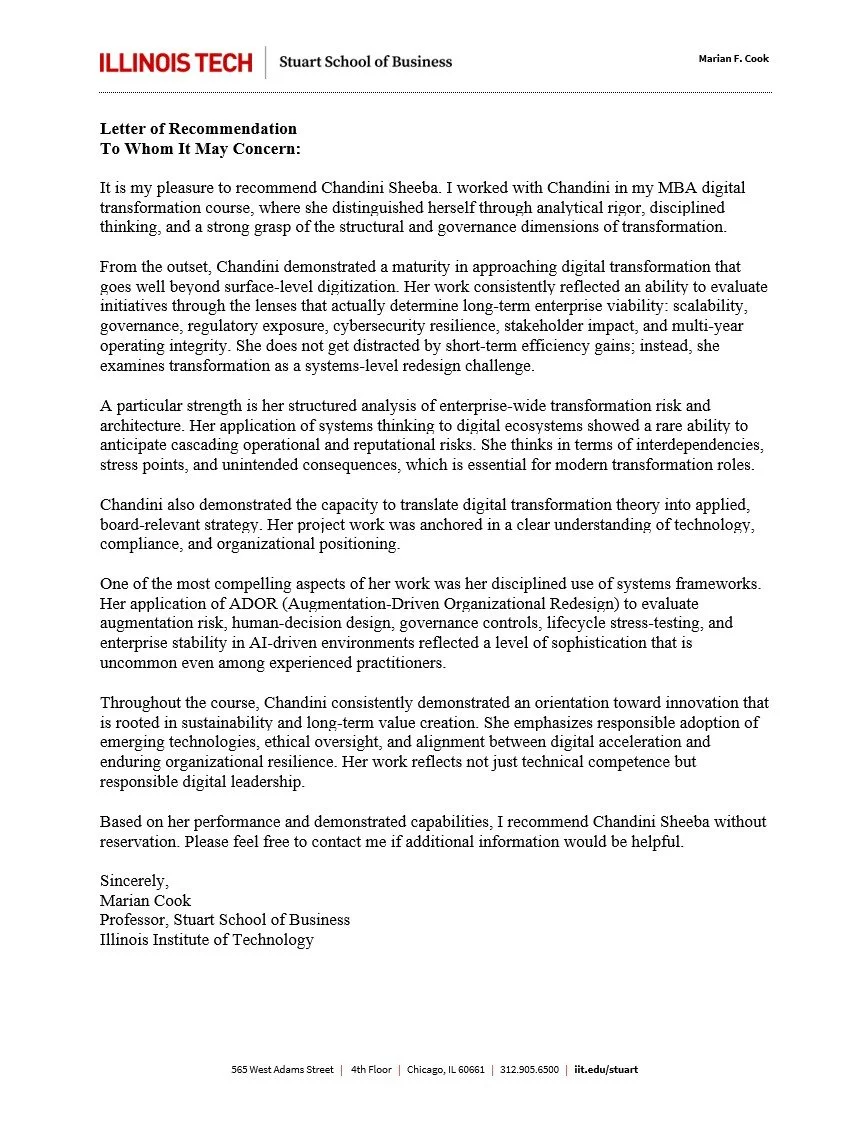
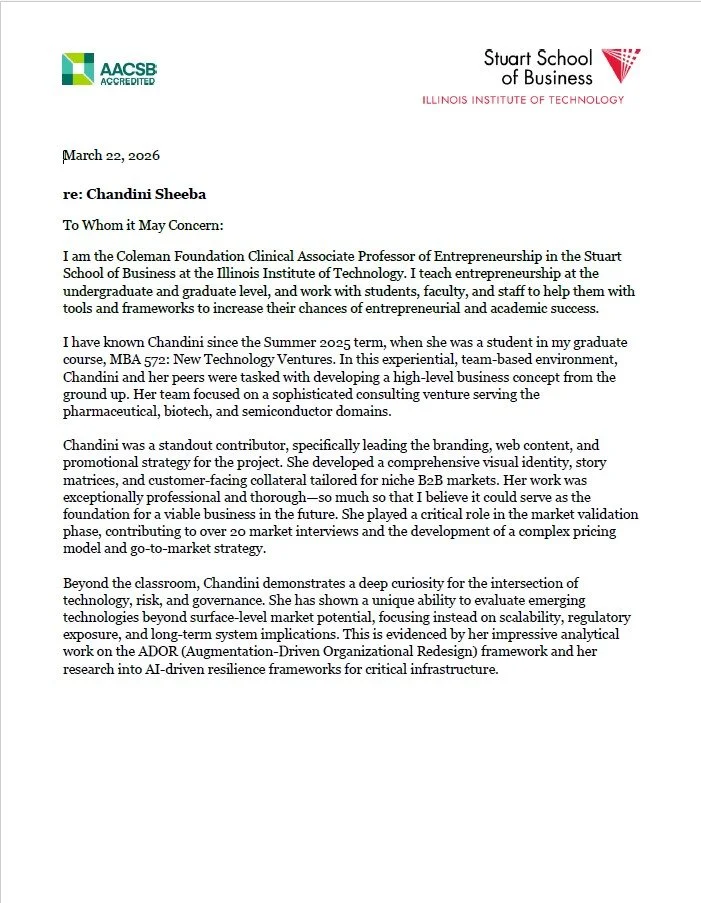
A central component of my research is the ADOR Framework (Augmentation‑Driven Organizational Redesign). The framework examines how organizations must redesign leadership structures, processes, and governance systems as generative artificial intelligence becomes embedded in enterprise decision‑making.
ADOR proposes that sustainable competitive advantage in the AI era emerges when organizations redesign three interdependent components of the enterprise:
Human Roles – Augmentation Over Automation
Employees transition from routine task execution toward roles that focus on interpretation, critical thinking, and oversight. In AI‑enabled environments, individuals increasingly act as strategic interpreters, prompt architects, and ethical validators who evaluate and supervise algorithmic outputs.Process Architecture – Continuous Intelligence Systems
Operational processes evolve from static dashboards toward intelligent systems capable of identifying anomalies, simulating potential outcomes, and supporting data‑driven decision making. These systems help organizations move from retrospective reporting toward proactive and adaptive operational intelligence.Trust Infrastructure – Governance by Design
Organizations embed traceability, accountability, and ethical oversight directly into AI systems through structured governance frameworks and executive oversight mechanisms. Trust infrastructure ensures that AI systems remain transparent, auditable, and aligned with institutional values.
Through these components, the ADOR framework positions cybersecurity, AI governance, and leadership as interconnected elements of a broader organizational redesign required for the age of generative AI.
Read More
From Theory to Practice: AI Governance Insights from Hong Kong
Research Themes
Cybersecurity Governance
Ethical Leadership
AI Governance
Human–Algorithm Interaction
Cybersecurity Maturity
Critical Infrastructure Resilience
Enterprise Architecture
Digital Governance
Organizational Design for AI
Cybersecurity and Governance Projects
Autonomous Resilience for Critical Infrastructure
A Case Study of the Collins Aerospace Cyberattack and the Aegis Mitigation Framework
This project analyzes the Collins Aerospace MUSE supply‑chain cyberattack as an example of how cyber incidents within interconnected aviation ecosystems can cascade across dependent infrastructure.
The study proposes the Aegis Autonomous Resilience Agent (ARA) framework designed to strengthen cyber resilience through:
Zero‑Trust privileged access management
Continuous behavioral biometric authentication
Just‑in‑Time privileged access controls
Autonomous containment using digital‑twin honeynets
Human‑in‑the‑loop oversight for remediation and strategic response
The research demonstrates how organizations can transition from reactive cybersecurity approaches toward autonomous resilience architectures capable of isolating threats while maintaining operational continuity.
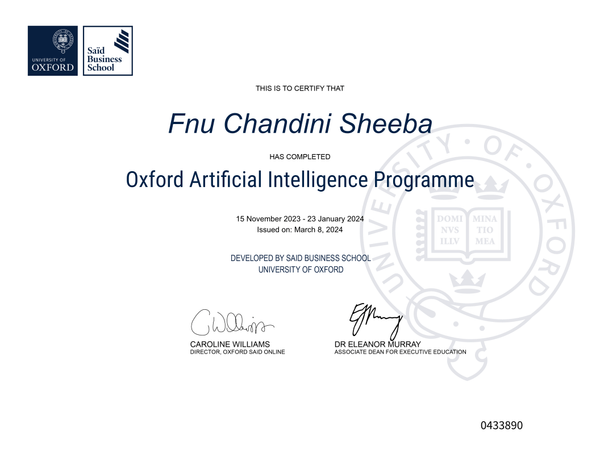
This project was completed as part of the Oxford Cyber Security for Business Leaders Programme.
Enterprise Architecture & Licensing Consolidation Strategy
Governance‑Driven Enterprise Modernization
This project examines how fragmented enterprise licensing, staggered technology renewals, and siloed procurement processes reduce operational visibility and weaken cybersecurity maturity.
The case study proposes a governance‑aligned consolidation strategy that integrates enterprise architecture, licensing agreements, and security tools into a unified operational model.
Key outcomes include:
Centralized visibility and reporting
Reduced administrative complexity
Improved budget predictability
Stronger alignment between infrastructure and cybersecurity maturity
Governance‑driven modernization
This work illustrates how enterprise architecture decisions and governance structures directly influence cybersecurity resilience.
Why This Research Matters
As organizations increasingly rely on AI‑enabled decision systems and interconnected digital ecosystems, cybersecurity failures often reflect governance failures rather than purely technical weaknesses.
My research examines how leadership, governance frameworks, and organizational design can help institutions transition from:
Reactive security → resilient security
Fragmented oversight → integrated governance
Automation → responsible augmentation
The objective is to help organizations design systems in which AI innovation, cybersecurity resilience, and ethical governance evolve together.
Academic Direction
My DBA research integrates insights from leadership theory, cybersecurity governance, enterprise architecture, and artificial intelligence risk management. The objective is to develop frameworks that are both academically rigorous and practically relevant to boards, executives, and policymakers navigating the governance challenges of AI‑enabled enterprises.
Certifications



Recommendations


Recognitions
Influential Women

Contributing to thought leadership on AI governance and cybersecurity, focusing on ethical oversight, risk management, and responsible innovation in evolving digital environments.
Emerging Directors Advisory Board (EDAB)

Selected member of the Emerging Directors Advisory Board (EDAB), contributing to boardroom readiness and governance development. EDAB brings together emerging corporate directors and executives to strengthen strategic oversight, governance capabilities, and leadership effectiveness through peer collaboration and engagement with experienced board leaders.
Accepted Presenter – ADOR Framework (HKU AI for Business Conference, 2026)
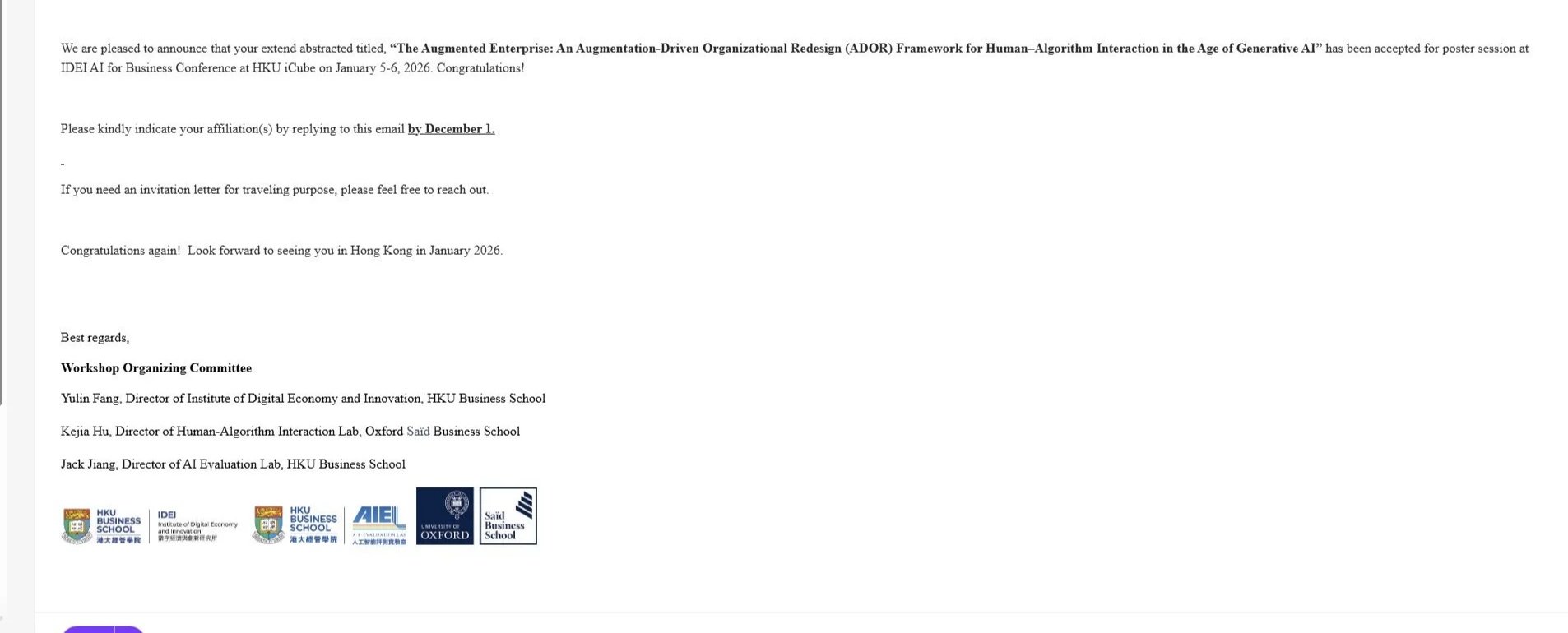
From Theory to Practice: AI Governance Insights from Hong Kong
Extended abstract titled “The Augmented Enterprise: An Augmentation-Driven Organizational Redesign (ADOR) Framework for Human–Algorithm Interaction in the Age of Generative AI” accepted for presentation at the IDEI AI for Business Conference, HKU Business School (in collaboration with Oxford Saïd Business School). Focused on governance-driven organizational redesign, AI integration, and human–algorithm interaction.
Memberships

NACD ID: 564219